

Costa Rica Climate in 2026: A Relocator's Zone-by-Zone Guide

Updated: Sep 18
Costa Rica's climate isn't one thing - it's roughly 14 microclimates packed into a country the size of West Virginia, and the one you pick will quietly decide your utility bill, your mold risk, and whether you need a 4×4 to get home in October. If you're moving here (not vacationing), the only honest answer to "what's the climate like?" is: it depends on the zone, the elevation, and the season - and getting any of those three wrong can be expensive.
Last updated: June 2026
Here's the thing the tourism sites won't tell you. I live in the South Pacific, at about 1,800 feet. My neighbor four kilometers away, down at 400 feet near the coast, runs his AC nine months a year and pays roughly four times what I do for electricity. Same "climate" on the weather map. Completely different lifestyle and budget.
That's the gap I want to close in this post.
Why Costa Rica's Climate Is More Complicated Than "Tropical"
Costa Rica sits between 8° and 11° north of the equator, so yes - technically tropical. But the country is squeezed between two oceans, has a mountain spine running down the middle, and contains six active volcanoes. Elevation runs from sea level to over 12,000 feet. As of late July 2026, Rincón de la Vieja is at alert level 3 of 4 after 38 eruptions since 2 July. If you're looking at property in the Guanacaste highlands near the park, check the OVSICORI bulletins before you commit.
That topography is why the country has roughly 14 distinct microclimates. The Caribbean side is wet most of the year. The North Pacific is bone-dry from December through April. The South Pacific is lush and humid. The Central Valley sits in eternal spring, its elevation keeping things mild year-round (more on the elevation sweet spot below).
So when someone tells you "it's tropical," they've told you nothing. The real question for a relocator is which microclimate fits your lifestyle and your budget.
The Six Climate Zones You Actually Need to Know
For practical purposes, you can narrow Costa Rica's 14 microclimates down to six zones that matter for relocators. Here's the honest version:
Zone | Climate | Dry Season | Best For | Watch Out For |
|---|---|---|---|---|
Central Valley (San José, Escazú, Atenas) | Eternal spring, 70–80°F / 21–27°C | Dec–April | Retirees, families needing schools/hospitals | 1.5–2 hours to beaches |
North Pacific / Guanacaste | Hot, dry, Arizona-like | Dec–April | Mature expat scene, dry-heat lovers | Highest coastal prices, water permit issues |
Central Pacific (Jacó, Manuel Antonio) | Hot, humid | Dec–April | Tourism, rental income | Humidity, party-zone Jacó |
South Pacific (Uvita, Dominical, Ojochal) | Tropical, lush, very humid | Dec–March (short) | Growth-play buyers, nature lovers | Intense May–Nov rainy season |
Southern Mountains (San Isidro, Pérez Zeledón) | Cool, mountain | Dec–April | Budget-conscious, lower utilities | Less infrastructure |
Caribbean (Puerto Viejo, Cahuita) | Wet year-round | No real dry season | Rasta vibe, lower prices | Limón crime, year-round rain |
If you're trying to figure out where to actually plant your flag, I'd start with the Playbook's South Pacific vs. North Pacific framing before you fly down - it'll save you about three scouting trips.
What Are Costa Rica's Main Climate Zones and How Do They Differ Day-to-Day?
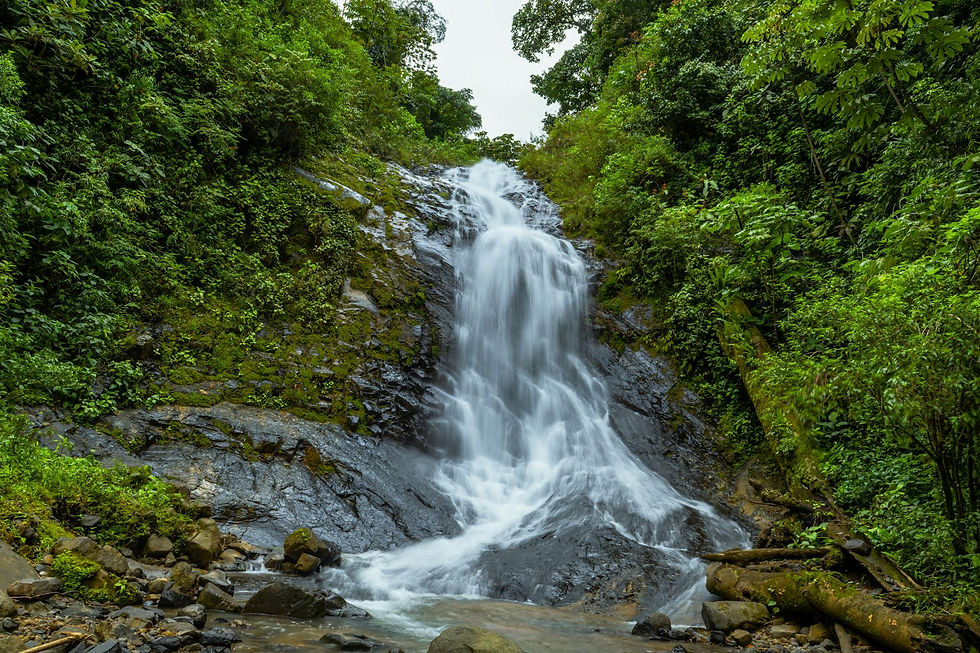
Day-to-day, the difference between zones is mostly humidity, AC use, and rain intensity.
In Escazú or Atenas, you'll wear a light sweater some evenings. You won't own an AC unit. Internet is fast and fiber-based. You're in jeans most days.
In Tamarindo, you're in shorts and a t-shirt 365 days a year. AC runs constantly from February through May. Dust coats everything in the dry season; you'll wash your car twice a week and stop caring by year two.
Where I live in Uvita, it's hot and humid most of the year. The jungle is loud - howler monkeys at 5 a.m., toucans by breakfast. From May through November, it rains hard most afternoons.
On the Caribbean side, there's no real dry season. It rains a little almost every week.
Same country. Completely different daily realities.
Dry Season vs. Rainy Season: What the Tourism Sites Won't Tell You
Tourism sites call May through November the "green season." Cute branding. For residents, here's the unvarnished version.
In the North Pacific, the dry season (Dec–April) is genuinely dry - sometimes too dry. Grass turns brown, and dust gets everywhere. Water is the buying risk nobody warns you about in Guanacaste, and it is not just seasonal rationing. More than 20 aqueducts in Guanacaste can no longer issue new water availability letters at all, and roughly one in five requests in the Chorotega region is rejected. No availability letter means no construction permit — you can own a lot you cannot legally build on. PAACUME, the infrastructure project meant to solve this, has slipped to 2030 with no funding yet allocated for the delivery network. Never buy land in Guanacaste without a current, valid water availability letter in hand — not a promise that one is coming, the letter itself.
In the South Pacific where I live, the rainy season is intense. We're talking 4–6 inches of rain in an afternoon. R You will need a 4×4 if you're outside town. Your internet may blink during storms - most serious remote workers I know run fiber plus a Starlink backup.
The Central Valley splits the difference: afternoon showers in rainy season, dry mornings, generally manageable year-round.
The relocator rule: see any property you're considering in BOTH seasons before you buy. The dry-season version of a road and the October version are different roads. I've watched buyers fall in love with a hillside in February and discover a waterfall running through their driveway in September.
One Thing That Changes the Picture for the Rest of 2026
El Niño. The IMN now puts the probability above 82% for the second half of 2026, with forecasts of up to 50% below-average rainfall in Guanacaste and the Central Valley and temperatures running 1.5 to 2°C above normal in Guanacaste. If you are using the month-by-month figures below to plan a move or a build, treat this year's dry season as likely to be longer, hotter and drier than the averages suggest — particularly in the North Pacific.
Temperature in Costa Rica by Month (With Real Numbers)
Here's the rough monthly picture for the three zones most relocators choose between. These are daytime highs, shown in both °F and °C.
Month | Central Valley (°F / °C) | North Pacific Coast (°F / °C) | South Pacific Coast (°F / °C) |
|---|---|---|---|
January | 75 / 24 | 90 / 32 | 88 / 31 |
February | 77 / 25 | 92 / 33 | 89 / 32 |
March | 79 / 26 | 94 / 34 | 90 / 32 |
April | 80 / 27 | 95 / 35 | 90 / 32 |
May | 80 / 27 | 92 / 33 | 88 / 31 |
June | 78 / 26 | 89 / 32 | 86 / 30 |
July | 77 / 25 | 89 / 32 | 86 / 30 |
August | 78 / 26 | 89 / 32 | 86 / 30 |
September | 78 / 26 | 88 / 31 | 85 / 29 |
October | 77 / 25 | 87 / 31 | 85 / 29 |
November | 76 / 24 | 88 / 31 | 86 / 30 |
December | 75 / 24 | 89 / 32 | 87 / 31 |
Nighttime lows in the Central Valley settle into the low-to-mid 60s°F (around 16–18°C). On the coasts, they rarely fall below the low 70s°F (about 22–23°C). That's why coastal AC bills are what they are.
What Elevation Should I Live at in Costa Rica to Avoid Humidity, Mold, and High AC Bills?

This is the single most useful piece of climate info I can give you, and it's missing from almost every guide on the subject.
0–500 ft: Hot, humid, AC essential. Expect electricity bills of $150–300+/month with AC running — and budget for that rising. ICE has contracted 273 MW of thermal generation as drought contingency, and ARESEP has signalled tariff increases for 2027. Thermal generation costs more than hydro, and that flows through to your bill.
900–1,300 ft: Avoid. You're sitting inside the cloud layer for chunks of the year. Mold on walls, damp linens, persistent mist. I've walked through gorgeous homes here that I wouldn't let a client buy.
1,500–2,500 ft: The sweet spot. Cooler, drier breezes, no cloud immersion, much lower AC use. My house is here. My electricity bill runs roughly a quarter of what coastal friends pay.
3,000+ ft (Central Valley high points): Cool to chilly. You'll want a sweater some evenings. No AC needed at all.
If you're cost-sensitive — and most relocators are once the spreadsheet comes out - elevation is the lever. I dig into this more in the hidden costs of moving to Costa Rica post.
Quick aside: if you're at the "I'm seriously looking" stage and want a real conversation about which zone fits your budget and lifestyle, you can book a call with me. I'm a buyer's agent, not a seller's agent — I work for you, not for a listing.
How Climate Affects Your Cost of Living
Climate affects your monthly nut more than people realize. Three big drivers:
Electricity. A 2-bedroom home at sea level on the Pacific coast with AC running most of the year: $150–300/month. The same square footage at 1,800 feet with ceiling fans and no AC: $50–90/month.
Internet. Fiber is widely available in the Central Valley, coastal towns, and the South Pacific corridor - but reliability dips in heavy rainy-season storms. Many remote workers run a fiber + Starlink redundancy. That's $80–120 for fiber plus around $150 for Starlink if you want zero downtime.
Vehicle. Coastal flatlands? A regular car is fine. South Pacific hills, mountain roads, or anywhere you'll deal with rainy-season ruts? You need a true 4×4 - not all-wheel-drive, an actual truck-chassis 4×4.
Can You Live on $3,000 a Month in Costa Rica?
Yes — comfortably, in most zones, if you're realistic.
The Playbook's three lifestyle tiers go like this: ~$1,600/month for a modest inland life (San Isidro, Atenas, smaller towns), ~$2,500/month for the comfortable middle most expat households land in, and $5,000+/month for a full beach-town premium lifestyle.
$3,000/month puts you solidly in the comfortable tier - a furnished 2-bedroom rental, eating out a few times a week, a mid-range car, decent internet, basic private healthcare on top of Caja. You won't be in oceanfront Tamarindo on that budget, but you can absolutely live well in Uvita, Atenas, the southern mountains, or the outskirts of Escazú.
Costa Rica's cost of living is materially lower than the US or Canada - but I won't tell you it's "half." That's lazy. An Escazú expat lifestyle saves you less than you'd think. A San Isidro local lifestyle saves you a lot.
Climate by Region: Where Should You Actually Live?

Central Valley (Escazú, Santa Ana, Atenas) - best for families needing top hospitals and international schools, retirees with health concerns, or anyone who wants spring-like weather year-round. If schools are on your list, this guide to Costa Rica's school system is worth a read before you commit to a zone.
North Pacific / Guanacaste - best for established expat amenities, dry heat, easy Liberia airport access. Most expensive coastal real estate.
South Pacific (where I live) - best for growth-play property buyers, nature lovers, younger expat families. Same setup the North Pacific had in 2015, 10 years behind on development. Hot and humid. Wet rainy season. Worth it if you want in early.
Southern Mountains (San Isidro) - best for budget-conscious relocators. Cooler, cheaper utilities, lower property prices, 50 minutes to the South Pacific beaches.
Caribbean - cheaper, beautiful. I generally steer families to the Pacific side, but be honest about why — it's about access, infrastructure and flight connections, not crime. The January to June 2026 property crime figures actually run lower in Limón (2,907) than in Puntarenas (4,183) or Guanacaste (3,426). The Caribbean's real trade-offs are rainfall, distance from San José and thinner services, not a higher chance of being robbed.
A Quick Story on Why Climate-by-Zone Matters
A neighbor of mine bought a three-bedroom here for $650,000, lived in it for two years, then had to move back to North America and sold it for $1,050,000 - a $400K gain in two years, and because it was his primary residence he kept every dollar of it, capital-gains exempt. Big win.
But here's the climate angle: he'd chosen his elevation band deliberately. High enough that the home stayed naturally cool, mold was never a problem, and his utility bills stayed reasonable year-round. If he'd chased a slightly better view a few hundred feet lower, down into the cloud band, the same house would have been a maintenance headache and a tougher resale.
Climate isn't just comfort. It's an investment variable.
Where to Go From Here
If you're seriously considering a move, climate should be one of the first three filters you apply - alongside your residency category and your financing plan. Get the zone right and everything else gets easier. Get it wrong and you'll be selling in 18 months.
If you're seriously interested in Relocating or investing in Costa Rica, the best way for you to continue your research, is using my Costa Rica Playbook its a free Ebook i wrote (not AI slop) and it has all the information you need when learning about costa rica. Get it free here.
By Mark Savoia - buyer's agent in Costa Rica since 2020
I've been living in Costa Rica and working as a buyer's agent here since 2020, after 25 years building homes back in Canada. Over 7,000 readers follow the Playbook, and we've helped clients move more than $1.4 billion in assets into Costa Rica - as Open Inventory buyer's agents, meaning we work for buyers and hold zero listings of our own. When you're ready for a real conversation about where to land, book a call.


Comments